
How did we estimate the Köppen-Geiger climatic zones where the species are found?
20251219 kg icon

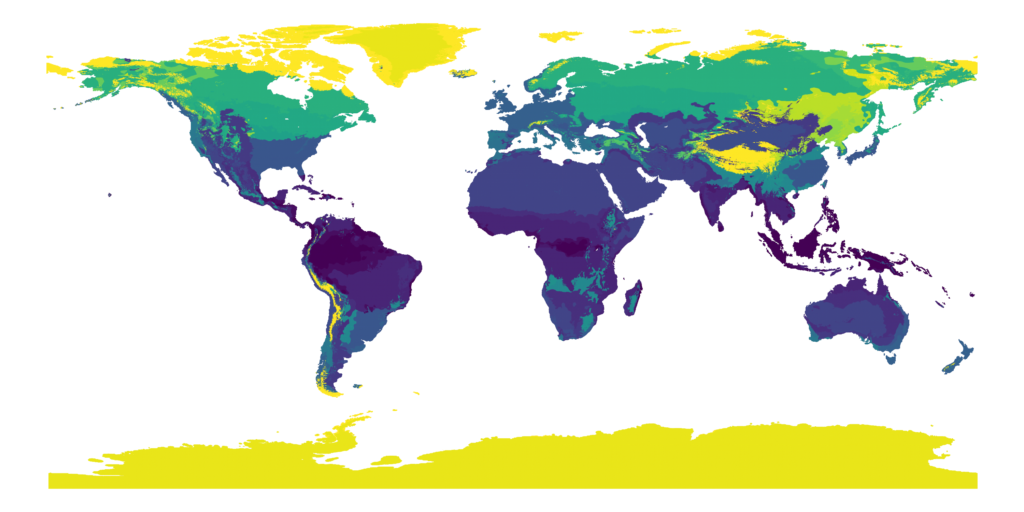
We based our data on the World Map of the Köppen-Geiger climate classification, provided by Kottek et al. (2006). This map classifies vegetation groups into 5 main climates (first letter in the classification code), taking into account precipitation (second letter in the classification code) and temperature (third letter in the classification code). After compiling the cleaned occurrence records for each species (click here for more details), we identified every climatic zone in which each species has been recorded.

Code scheme:

Main climates

A

equatorial

B

arid

C

warm temperate

D

snow

E

polar

Precipitation

W

desert

S

steppe

f

fully humid

s

summer dry

w

winter dry

m

moonsoonal

Temperature

h

hot arid

k

cold arid

a

hot summer

b

warm summer

c

cool summer

d

extremely continental

F

polar frost

T

polar tundra

Code scheme:

Main climates

A

equatorial

B

arid

C

warm temperate

D

snow

E

polar

Precipitation

W

desert

S

steppe

f

fully humid

s

summer dry

w

winter dry

m

moonsoonal

Temperature

h

hot arid

k

cold arid

a

hot summer

b

warm summer

c

cool summer

d

extremely continental

F

polar frost

T

polar tundra