
How did we estimate the environmental gradients where the species are found?
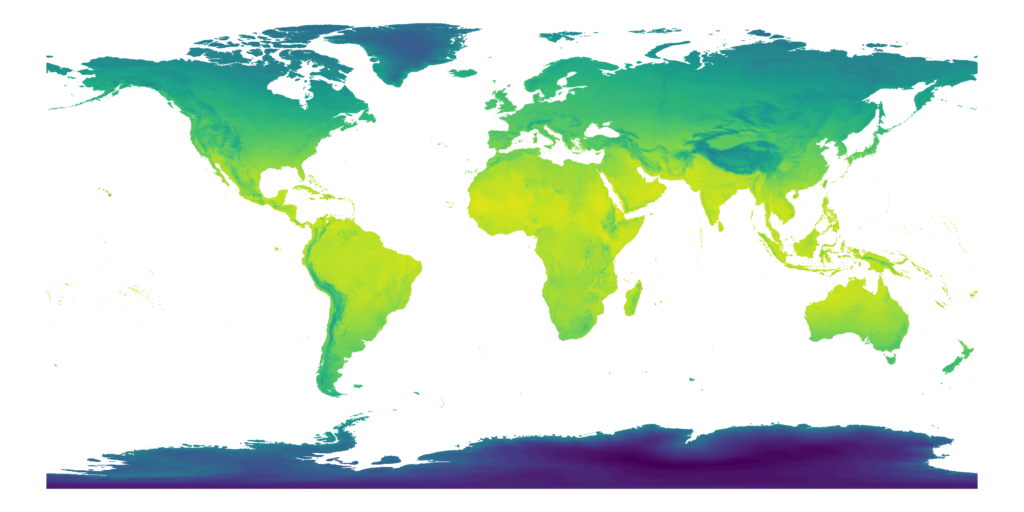
We based our data on topo-climatic datasets provided by WorldClim (Fick & Hijmans 2017) and CHELSA (Karger et al. 2017). These datasets consist of (gridded and georeferenced) topographic or climatic maps of the Earth, where climatic information is interpolated (and/or modeled) from weather station data across the world. After compiling the cleaned occurrence records for each species (click here for more details), we obtained the elevation and climatic information from each occurrence point where each species has been recorded. This information is displayed by density plots for a better visualisation of the species distribution patterns across the used environmental gradients.
Environmental gradients used:
Elevation
Elevation in meters above the sea level (m.a.s.l., derived from the SRTM elevation data)
BIO1
Annual mean temperature, as the average monthly mean temperatures over the year in Celsius degrees (°C)
BIO4
Temperature seasonality, as the standard deviation of monthly mean temperatures in Celsius degrees (°C) multiplied by 100. In other words, it represents the variation of monthly temperatures (in °C x 100) in relation to the annual mean
BIO12
Annual precipitation, as the accumulated precipitation over the year in millimeters (mm)
BIO15
Precipitation seasonality, as the standard deviation of monthly precipitation in millimeters (mm) divided by the mean monthly precipitation in mm, multiplied by 100. In other words, it represents the variation in monthly precipitation (in %) in relation to the monthly average
Reference