
Learn more about our approach
WHAT ARE DT PLANTS?
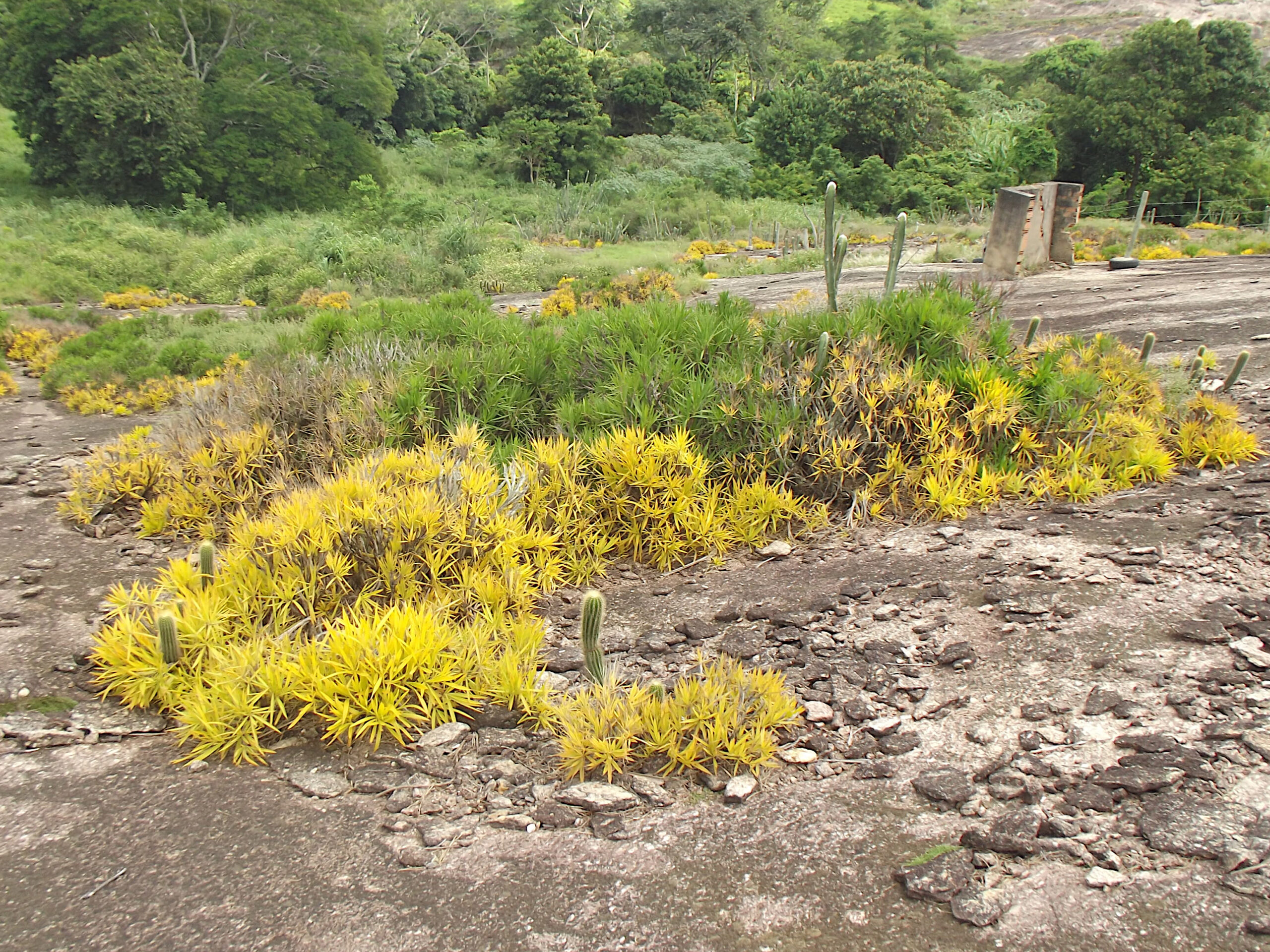
Here, ‘DT plants‘ refers to vascular plants able to tolerate the desiccation of their vegetative tissues, or more precisely, to dry to a quiescent state and resume normal cellular function when rehydrated. In this process, they lose up to 95% of their relative water content, reaching water potential levels below−100 MPa with little or no biomass loss. Although a rare response among vascular plants, desiccation tolerance spans across diverse clades in the phylogeny of vascular plants, resulting from multiple independent evolutionary events. To the best of our knowledge, there are 361 known species of DT plants, distributed within 71 genera and 17 families. They are found worldwide, particularly diverse in regions such as Southeast Brazil, East-South Africa, and Madagascar.
Besides, they are more prominent in certain vegetation types. That is because this remarkable strategy confers them the capacity to grow in environments where water shortages are often or intensive enough to cause irreversible damages to most vascular plants, such as rock outcrops and forest canopies.
WHY STUDY DT PLANTS?
The ability of organisms to tolerate desiccation has long intrigued scientists. In 1702, the microbiologist Anthonie von Leeuwenhoek described still-living rotifers in a re-moistened sediment. Despite this early discovery, it took over 200 years for desiccation tolerance to be discussed in vascular plants. The first studies on vegetative tissues of vascular plants date from 1914 for ferns and 1921 for angiosperms. Nowadays, we have a deeper understanding of the different mechanisms that allow DT plants to tolerate desiccation, as different reviews and global and regional syntheses are found in the literature. However, our knowledge remains noticeably biased toward certain taxa and geographic regions. Identifying and reducing these biases and current knowledge gaps is highly necessary to achieve a true scientific progress in the study of these species.
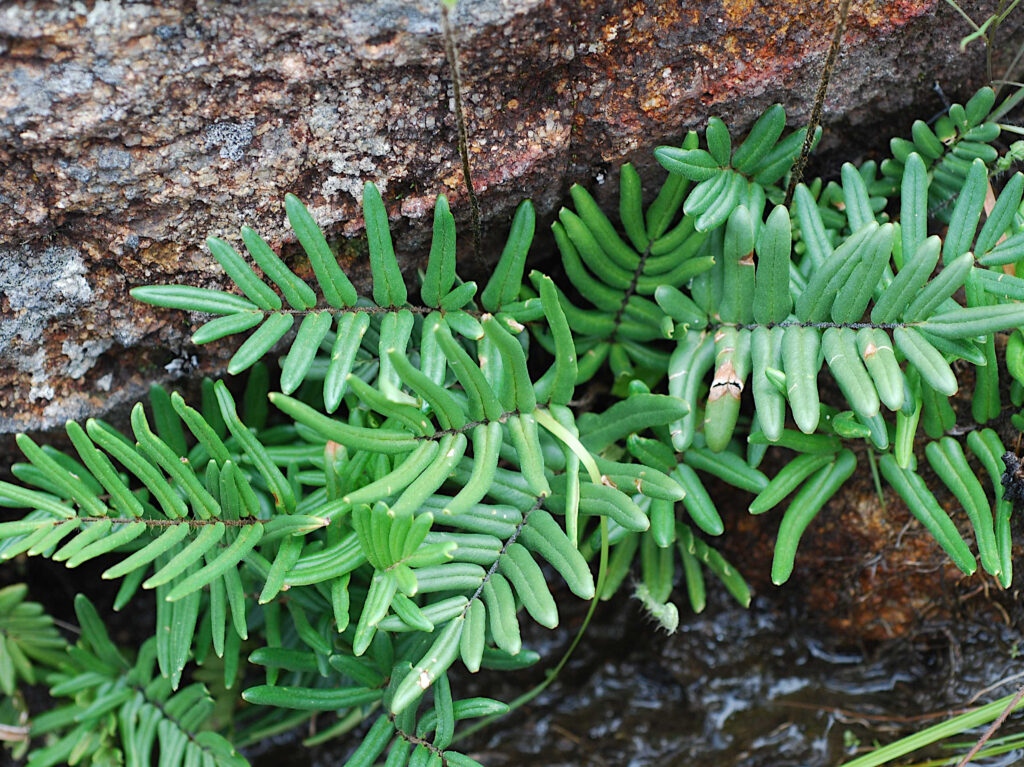
This is especially important if we consider that research on DT plants holds immense promise for fields such as agriculture and biotechnology, offering insights to engineer drought-resistant crops and address food security under climate change scenarios, for example.
HOW DATA WAS OBTAINED
The data supporting this resource were compiled through a multi-step process. First, we compiled a global species list of DT plants. For that, we conducted an extensive literature review (including grey literature) to identify all studies citing DT plant species according to our definitions of desiccation tolerance. This species list was harmonized following the taxonomic backbone provided by the World Checklist of Vascular Plants (WCVP) 1. Then, for all DT plants in our resulting species list, we identified their geographic distribution, ecology, and conservation aspects. For that, we first compiled all known occurrence records for each species from the Global Biodiversity Information Facility (GBIF) database. They were used to generate species distribution hypotheses according to two modeling techniques: Maxent and Inverse Distance Weighting (alternatively, by the Circular Area method) 2. We also used the resulting occurrence records to obtain information about the species distribution across ecological and environmental gradients with the aid of the global datasets 3, 4, 5. Information about the conservation aspects of DT plants was obtained by compiling the information available in the global conservation efforts 6. At last, we attempted to identify knowledge gaps in the study and conservation of DT plants in three different ways: identifying the literature bias towards certain taxa, assessing the discrepancy between the species data collection and their expected occurrence across world botanical countries 7, and evaluating the lack of conservation assessment in the above-mentioned global conservation efforts.
KEY REFERENCES
Bondi et al. 2025. bioRxiv, 2025-10.
Marks et al. 2025. Nature Communications, 16: 3284.
Farrant et al. 2020. Frontiers in Plant Science, 11:1–3.